
Healthcare Resources 2027
About this page
This page has been created for HPS clients, members and associated individuals to provide convenient access to relevant information, guides and documents relating to medical schemes, health insurance and gap cover for the 2027 benefit year.
Important Notice: Every effort is made to ensure that the information provided is accurate and current. However, benefits, contributions, terms and conditions may change, and documents published on this page may become outdated. HPS accepts no responsibility for any errors, omissions or outdated information. Please verify all information with the relevant provider’s official website or documentation before making any decisions. The latest official information and applicable policy or scheme rules will take precedence.
If you identify any errors or outdated information, or have suggestions for improving this resource, please let us know. You are also welcome to contact us if you require further assistance or clarification.
Table of Contents
Main Focus
Medical Schemes
A medical scheme is a regulated, not-for-profit membership arrangement in which members’ contributions are pooled to fund eligible healthcare costs. In South Africa, medical schemes operate under the Medical Schemes Act 131 of 1998 and are regulated by the Council for Medical Schemes.
Medical scheme options generally combine two broad categories of benefits: major medical cover (aka Core Plan or “Hospital Plan” and day-to-day healthcare benefits. The balance between these depends on the option selected. Some options focus on essential hospital and chronic care, while others include more extensive everyday benefits.
Medical scheme options generally combine two broad categories of benefits: major medical cover (often referred to as a Core Plan or “Hospital Plan”) and day-to-day healthcare benefits. The balance between these depends on the option selected. Some options focus on essential hospital and chronic care, while others provide more extensive benefits for everyday healthcare.
All registered medical scheme options must provide the applicable Prescribed Minimum Benefits (PMBs), as required by the Medical Schemes Act. These cover qualifying emergency medical conditions, specified medical conditions and certain chronic conditions, subject to the applicable treatment protocols and designated service provider requirements.
More comprehensive options may offer benefits beyond these minimum requirements, including higher reimbursement tariffs, broader provider networks and more extensive cover for certain treatments, prostheses and medicines.
Core benefits are primarily designed to protect members against the potentially high costs of serious illness, accidents and hospital treatment.
Benefits typically include:
Hospital admissions, surgery and related hospital expenses.
Specialist and diagnostic services associated with hospital treatment, including anaesthesia, pathology, radiology, scopes and scans, subject to the option’s rules.
Certain day procedures, which may include scopes and selected dental or surgical procedures, depending on the option.
Chronic disease management and qualifying chronic medication.
Disease management programmes for certain serious or ongoing conditions, such as cancer, diabetes and kidney disease requiring dialysis.
Selected preventative healthcare, such as screening, vaccinations and health assessments, depending on the option.
The level of cover can vary considerably. Some options focus on PMB requirements and use designated hospital and provider networks to keep contributions affordable. Others offer broader benefits, higher specialist reimbursement tariffs (for example, 100%, 200% or more of the scheme tariff) and greater flexibility in choosing healthcare providers.
Importantly, a stated reimbursement level is generally calculated against the scheme’s own tariff, not necessarily the amount charged by the healthcare provider. Even a higher reimbursement percentage does not guarantee that the full account will be paid.
Day-to-day benefits help fund more regular healthcare expenses, such as GP consultations, acute medication, certain specialist consultations, blood tests and other out-of-hospital services. Dental and optometry benefits may also be included.
The extent of cover depends on the option selected. Some options provide limited benefits through designated healthcare networks, while others offer defined annual benefits, a medical savings account or a combination of savings and additional insured benefits.
Although terminology varies between schemes, the following descriptions provide a useful general guide:
Core / Hospital Plan: Major medical benefits focused on hospitalisation and specified healthcare needs, with applicable PMBs and any additional chronic or preventative benefits included in the option.
Saver: Major medical benefits combined with a medical savings account to fund eligible day-to-day expenses. Once the available savings have been used, members may need to pay further routine expenses themselves unless another benefit applies.
Comprehensive: Major medical benefits combined with a medical savings account and, on some options, additional insured day-to-day benefits. Certain options also use an insured self-payment gap or threshold arrangement, under which additional day-to-day claims may become payable once specified conditions have been met.
Traditional: Major medical benefits combined with defined day-to-day benefits, often subject to annual limits or separate benefit sub-limits rather than a medical savings account.
Network / Capitation-based: Major medical benefits combined with specified primary healthcare services delivered through designated providers or networks. Some arrangements use capitation, whereby providers receive a predetermined payment for an agreed package of services. These options can be more affordable but may involve restrictions on provider choice and access.
These categories are not mutually exclusive, and not every scheme offers all of them. The actual benefits, limits, networks and conditions in the option’s benefit guide and registered rules determine the cover available.
As a general rule, lower-cost options tend to offer more restricted benefits, provider networks or choice, while higher-cost options may provide broader benefits and greater flexibility. However, price alone does not determine the quality or suitability of cover. The benefit structure, network arrangements, exclusions, co-payments and reimbursement limits all matter.
A serious accident, major operation, cancer diagnosis or other complex medical condition can result in substantial healthcare expenses, potentially running into hundreds of thousands or even millions of rand.
For this reason, we generally recommend considering a medical scheme with adequate major medical cover as the starting point for healthcare protection. Even a more basic hospital-focused option can provide an important level of financial protection against eligible major medical expenses, alongside the statutory PMB benefits.
Where affordability is a concern, a lower-cost medical scheme option may be worth considering before relying solely on health insurance. The aim is to establish a suitable foundation of medical protection and then assess whether additional day-to-day benefits or complementary products are appropriate.
Health insurance is not the same as medical scheme cover. Local health insurance products generally pay defined benefits in accordance with their policy terms, rather than funding eligible healthcare expenses on the same basis as a registered medical scheme. Depending on the policy, the amount paid may be substantially less than the actual cost of treatment, leaving the insured person exposed to significant expenses.
International health insurance can operate differently and may provide broader medical expense cover, depending on the policy. However, products should be compared on their actual terms, exclusions, limits and scope of cover rather than assumed to be equivalent.
The appropriate solution will depend on your healthcare needs, affordability and the level of financial risk you are prepared to retain.
Read about how medical schemes are structured, the benefits they provide, and why a medical scheme should form the foundation of your healthcare protection…
Discovery Health Medical Scheme 2027
Please read over the Discoverer Oct 2026 for an update on 2027 developments and benefit changes:

All categories
DHMS Overview Documents 2
| Title | Date | Size | Type | Download |
|---|---|---|---|---|
| DHMS Contribution Table 2027 | 10/16/2026 | 1.1 MB | Download | |
| Discovery Health Discoverer September 2026 | 10/16/2026 | 18.6 MB | Download |
No documents found.
Discovery Options 2027 9
| Title | Date | Size | Type | Download |
|---|---|---|---|---|
| DHMS 2027 Plan Comparrison | 10/16/2026 | 485 KB | Download | |
| DHMS 2027 Executive Plan Guide | 10/16/2026 | 3.6 MB | Download | |
| DHMS 2027 Comprehensive Plan Guide | 10/16/2026 | 4.1 MB | Download | |
| DHMS 2027 Scheme Priority Plan Guide | 10/16/2026 | 4.8 MB | Download | |
| DHMS 2027 Saver Plan Guide | 10/16/2026 | 4.6 MB | Download | |
| DHMS 2027 Smart Saver Plan Guide | 10/16/2026 | 5.0 MB | Download | |
| DHMS 2027 Core Plan Guide | 10/16/2026 | 3.4 MB | Download | |
| DHMS 2027 Smart Plan Guide | 10/16/2026 | 5.6 MB | Download | |
| DHMS 2027 Keycare Plan Guide | 10/16/2026 | 11.1 MB | Download |
No documents found.
DHMS Additional Info 7
| Title | Date | Size | Type | Download |
|---|---|---|---|---|
| 2026 DHMS Hospital Network List | 10/16/2026 | 981 KB | Download | |
| 2026 DHMS Cataract Network List | 10/16/2026 | 749 KB | Download | |
| 2026 DHMS Day Surgery Network List | 10/16/2026 | 1.0 MB | Download | |
| 2026 DHMS Keycare Gp Network List | 10/16/2026 | 1.1 MB | Download | |
| 2026 DHMS Major Joints Network List | 10/16/2026 | 1.0 MB | Download | |
| 2026 DHMS Africa Benefit | 10/16/2026 | 363 KB | Download | |
| 2026 DHMS International Travel Benefit | 10/16/2026 | 401 KB | Download |
No documents found.
DHMS Applications 7
| Title | Date | Size | Type | Download |
|---|---|---|---|---|
| DHMS 2027 Application To Add Dependants | 10/16/2026 | 397 KB | Download | |
| DHMS 2027 Application To Join DHMS | 10/16/2026 | 595 KB | Download | |
| DHMS 2027 Application To Join Employer KeyCare Essential Samrt | 10/16/2026 | 315 KB | Download | |
| DHMS 2027 Application To Join Employer Group Limited UW | 10/16/2026 | 386 KB | Download | |
| DHMS 2027 Application To Join Employer Group | 10/16/2026 | 324 KB | Download | |
| DHMS 2027 Application To Move From Another Scheme | 10/16/2026 | 409 KB | Download | |
| DHMS 2027 Employer Application To Join Employer Group | 10/16/2026 | 2.5 MB | Download |
No documents found.
No documents found.
GAP Cover
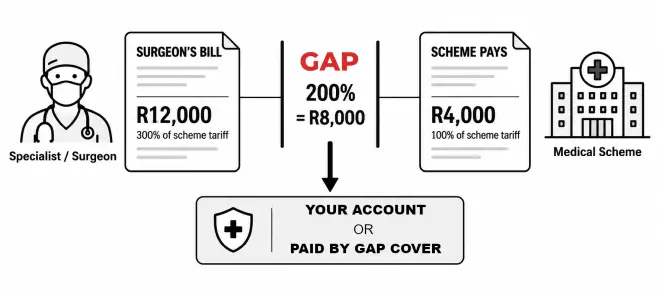
Gap Cover is short-term insurance designed to protect against shortfalls on major medical and hospital-related claims. It complements your medical scheme by helping cover certain costs the scheme does not pay in full.
What is GAP Cover
Its main purpose is to bridge the difference between (GAP) what specialists, surgeons and anaesthetists charge and what your scheme pays.
Depending on the policy, it may also cover:
Co-payments and deductibles for hospital admissions, day procedures, scans and scopes.
Out-of-network penalties imposed by your medical scheme.
Extended benefits, such as casualty and oncology cover.
Benefits, limits and exclusions vary by policy, so cover is always subject to the applicable terms and conditions.
Your medical scheme remains the foundation of your healthcare protection. It provides cover for eligible healthcare expenses in accordance with your selected option and the scheme’s rules.
GAP Cover is complementary: it is intended to extend that protection by helping with certain shortfalls and co-payments. It does not replace medical scheme membership, provide the same breadth of cover as a medical scheme, or guarantee that every unpaid expense will be covered.
In most cases, you must first submit the eligible expense to your medical scheme. Gap Cover then assesses the remaining shortfall against the benefits and conditions of your policy.
It is important to remember that Gap Cover is not comprehensive day-to-day medical insurance. Routine GP visits, ordinary specialist consultations, medication and other everyday expenses are generally not covered unless a specific policy benefit provides otherwise.
Medical schemes face continuing pressure from rising healthcare costs, increased utilisation, medical technology, new treatments and changing demographic profiles. They must balance the cost of claims with affordable member contributions and the need to maintain financial sustainability.
To manage these pressures, schemes may introduce or adjust co-payments, benefit sub-limits, preferred-provider networks and other funding restrictions. These measures can help control costs and contributions, but may also leave members exposed to greater out-of-pocket expenses, particularly when they require specialist treatment or choose providers who charge above scheme tariffs.
Gap cover has therefore become an increasingly relevant part of healthcare planning. It can provide an additional layer of financial protection against certain unexpected shortfalls, helping to reduce the risk that an otherwise well-planned healthcare arrangement results in a significant unanticipated bill.
Gap cover is not unlimited protection. Policies have specific benefit limits, annual maximums, exclusions, waiting periods and other conditions. Some benefits apply only to specified procedures or circumstances, and claims must meet the policy’s requirements.
There may also be a cash-flow consideration: healthcare providers can require payment before the medical scheme and Gap insurer have finalised their respective claims. You may need to pay an amount upfront and recover eligible benefits afterwards.
The right policy should therefore be assessed against your medical scheme option, likely healthcare needs, provider preferences, affordability and tolerance for out-of-pocket costs.
The principle is simple: protect the foundation first, then consider how best to extend it. Your medical scheme provides the core cover; Gap cover is a complementary layer designed to help bridge certain gaps in that cover — not replace it.
Gap Cover is subject to a regulatory overall annual limit per insured person. For the period 1 April 2026 to 31 March 2027, this limit is approximately R226,881 per person per year.
This is the overall regulatory ceiling, not a guaranteed payout. Individual benefits within a policy may have substantially lower limits, and claims remain subject to the policy’s terms, exclusions and qualifying requirements.
Gap Cover helps with eligible shortfalls on major medical and hospital-related claims, such as specialist fees and specified co-payments.
The Self-payment Gap is a day-to-day funding gap on certain comprehensive medical scheme options. Once your medical savings are exhausted, you pay eligible expenses yourself until you reach the scheme’s threshold. The Above Threshold Benefit (ATB) may then kick in, subject to the scheme rules.
Gap Cover generally does not cover the Self-payment Gap or these day-to-day expenses. Always check your policy’s terms and exclusions.
Read more about what GAP cover is, what it isn’t, why it is becoming more relevant and other important aspects…
We like Stratum Benefits! We believe they offer good value for money, with a competitive range of Gap Cover options. While their system transition presented some challenges over the past year, our experience with them over time has been positive, and we continue to regard them as a good option for our clients.
Stratum GAP Cover – 2027 product comparison
| Option | Key features and positioning | HallmarkPro Assessment | |
|---|---|---|---|
| Luma300 | Individual-only cover with 300% medical expense shortfall cover, co-payment benefits, cancer-related benefits, selected preventative care, casualty cover and complimentary international travel insurance for qualifying leisure travel. Premiums are age-based: 35 and younger, and 36 and older. | Young professionals, single adults and older individuals who do not need dependent cover. ★★☆☆☆ 2/5 | |
| Compact300 | A balanced family-cover option with 300% medical expense shortfall cover, admission and procedure co-payments, cancer benefits, internal prosthetic device shortfalls and selected scan benefits. The 2027 enhancements include a scan top-up benefit of up to R4,000 per policy per year and a cancer treatment top-up of R65,000. | Young families and cost-conscious households wanting broad, practical protection. ★★★☆☆ 3/5 | |
| Meridian400 | 400% medical expense shortfall cover, with selected benefits for penalty co-payments, cancer treatment, scan and casualty expenses. A useful middle ground for clients concerned about specialist tariffs and significant hospital-related shortfalls. | Families and older members wanting stronger specialist shortfall protection without moving to the top-tier option. ★★★★☆ 4/5 | |
Elite500 | 500% medical expense shortfall cover, with enhanced protection for selected co-payments, robotic surgery, cancer treatment, scans, prosthetic devices, rehabilitation and outpatient specialist expenses. Particularly worth considering where the cost of specialist treatment and the potential financial impact of major medical events are priorities. | Clients wanting the highest level of conventional gap cover and broader supplementary protection. ★★★★★ 5/5 | |
| Access Optimiser | Focuses on specified procedures and treatments that may not be covered by the medical scheme, such as certain joint replacements, back or neck surgery, scopes and selected dental procedures. It is not a substitute for conventional gap cover. | Members whose medical scheme option excludes specific procedures and who need targeted supplementary cover. ★★☆☆☆ 2/5 | |
| Access Co-Pay Plus300 | Combines cover for qualifying procedures excluded by the medical scheme with additional protection for eligible medical expense shortfalls and co-payments. Its suitability depends on the scheme’s exclusions and the policy’s specified benefits. | Members needing specified-procedure protection together with selected gap cover and co-payment benefits. ★★★☆☆ 3/5 |
Stratum Gap Cover – key differentiators
Stratum offers a flexible range of gap cover options designed to suit different needs and budgets, with premiums that are independent of your medical scheme option and loyalty programme status. Its benefits extend beyond traditional specialist shortfall cover, with selected options providing additional protection for specified procedures that may not be covered by your medical scheme.
Depending on the product selected, benefits may also include cancer treatment shortfalls and top-ups, breast reconstruction, qualifying outpatient specialist consultations, casualty expenses, and co-payment cover. This broader range of benefits can help address medical expenses both in and out of hospital, with the most suitable option depending on your medical scheme benefits and individual needs.
Read our summary of Stratum’s GAP cover options…
All categories
Stratum Options 2027 5
| Title | Date | Size | Type | Download |
|---|---|---|---|---|
| 2027 The Stratum Times | 10/16/2026 | 524 KB | Download | |
| 2027 Stratum Individual Gap Cover Product Range Single Pg | 10/16/2026 | 4.2 MB | Download | |
| 2027 Stratum Individual Gap Cover Product Range Double Pg | 10/16/2026 | 4.1 MB | Download | |
| 2026 Vs 2027 Individual Product Range Premium Overview | 10/16/2026 | 95 KB | Download | |
| 2027 Stratum Corporate Gap Cover Product Range Brochure | 10/16/2026 | 3.5 MB | Download |
No documents found.
Stratum Applications 4
| Title | Date | Size | Type | Download |
|---|---|---|---|---|
| 2027 Stratum Individual Gap Cover Client Offer Form | 10/16/2026 | 267 KB | Download | |
| 2027 Stratum Corporate Gap Cover Client Offer Form | 10/16/2026 | 248 KB | Download | |
| 2027 Stratum Gap Cover Underwriting Concessions For Individuals | 10/16/2026 | 128 KB | Download | |
| Gap Cover Transfer Process For Individuals | 10/16/2026 | 494 KB | Download |
No documents found.
No documents found.
Discovery GAP 2027
Discovery GAP Cover – 2027 product comparison
| Option | High-level Description | HallmarkPro Assessment |
|---|---|---|
| Discovery Gap 100 | Entry-level cover providing up to 100% of the medical scheme rate towards approved in-hospital specialist shortfalls. Includes a limited procedural deductible benefit for certain Discovery Health Medical Scheme plans. | Basic – an affordable starting point for clients wanting some protection against specialist shortfalls. |
| Discovery Gap 250 | Mid-level cover providing up to 250% of the medical scheme rate towards approved in-hospital specialist shortfalls. Includes an additional Hospital Admission Benefit Extender of up to R7,500 per policy, plus oncology cover. | Good – a balance between affordability and additional protection. |
| Discovery Gap 500 | Comprehensive standard gap cover providing up to 500% of the medical scheme rate towards approved in-hospital specialist shortfalls. Includes an additional Hospital Admission Benefit Extender of up to R15,000 per policy, enhanced oncology cover, and additional benefits for specified scopes, scans and international travel. | Very good – stronger protection against specialist shortfalls and selected additional healthcare costs. |
| Discovery Gap 500 Plus Pro | Extended cover providing up to 500% of the medical scheme rate towards approved specialist shortfalls in hospital and day clinics. Also covers specified co-payments, non-network deductibles, casualty visits, certain scheme sub-limits and cancer-related shortfalls. Includes the Day-to-day Protector and a separate Oncology Protector cash benefit, subject to qualifying requirements. | Most comprehensive – broader protection extending beyond traditional gap cover, particularly for casualty visits and certain day-to-day expenses. |
Source: Discovery’s 2027 Gap Cover brochure, pages 4–10, and Gap 500 Plus Pro brochure, pages 4–13.
Discovery Gap Cover – key differentiators
Discovery Gap Cover benefits from being integrated with the Discovery Health Medical Scheme claims process. Rather than requiring members to submit a separate gap cover claim, Discovery can identify potential shortfalls from the medical scheme claims information (subject to the required consent) and assess and pay eligible claims once the medical scheme has processed them.
This creates a more seamless claims experience. One consideration is that premiums vary according to the Discovery Health Medical Scheme plan selected, the age of the oldest member and whether single or family cover applies. Notably, members on Essential, Active and Coastal plans can pay higher Gap Cover premiums than members on Executive and Classic plans, despite having lower levels of medical scheme benefits. Clients should therefore consider the combined cost of their medical scheme and gap cover when comparing options.
Does Vitality status affect the benefits?
Yes, but the effect differs between the standard Gap Cover options and Gap 500 Plus Pro.
Gap 500 and Gap 250: Vitality Health status affects the value of the Annual Hospital Admission Benefit Extender. Higher status levels, from Blue/None through to Diamond, unlock higher additional benefit amounts. For example, on Gap 500 for a single member on an MSA plan, the benefit ranges from R3,800 at Blue/None to R7,500 at Diamond. Gap 250 has a lower benefit scale.
Gap 100: The Vitality integration benefits do not apply.
Gap 500 Plus Pro: The Day-to-day Protector and Oncology Protector benefits are linked to completing specified health actions, including a Health Check and engagement with Personal Health Pathways. The Oncology Protector can pay up to R250,000, depending on the benefits unlocked and the qualifying diagnosis. This is not simply a benefit determined by your Vitality status tier.
Read our summary of Discovery’s GAP options…
Health Insurance
Health insurance offers a more affordable way to provide employees with access to certain healthcare services, but it is not a substitute for a medical scheme.
Unlike a medical scheme, health insurance generally pays defined benefits according to the terms and limits of the policy. These may be fixed amounts, or benefits payable only for specific events or circumstances. The shortfall can be substantial: cover may be insufficient to meet the actual cost of treatment, and certain conditions, chronic illnesses or elective procedures may fall outside the policy benefits altogether, leaving individuals reliant on the public healthcare system or required to fund the costs themselves.
Health insurance can provide valuable, affordable access to selected healthcare services, but it does not come close to the breadth of protection offered by a medical scheme, particularly when serious, complex or expensive medical treatment is required.
A Health Inurance is NOT the same as a Medical Scheme
Medical schemes operate under the Medical Schemes Act and are required to provide broad Prescribed Minimum Benefits (PMBs) for specified emergency medical conditions, certain diagnoses and treatments, and defined chronic conditions, subject to the applicable regulations. This legislative framework establishes a level of protection that health insurance is not designed to replicate, while helping to prevent insurers from effectively conducting the business of a medical scheme outside the regulated medical scheme environment.
The opportunity lies in designing affordable, practical cover that meets everyday healthcare needs. For lower-paid employees, this may mean prioritising emergency and casualty treatment, with the option of adding primary healthcare benefits such as GP consultations, basic medication and other day-to-day services.
The objective is to provide meaningful access to essential healthcare within a manageable budget, while recognising that health insurance may offer limited financial protection in the event of a major illness, serious accident or prolonged hospitalisation. A medical scheme remains the more appropriate foundation for comprehensive protection against potentially substantial medical expenses.
Read more about what Health Insurance is, how is differs from a Medical Scheme and some of the limitations to be aware of…
Opportunities
Good option for Domestic Workers
Supplement your Medical Scheme
i.e. CORE Medical Scheme Option (Major Med) PLUS Stratum Essential Primary Plus
Emergency & Accident Benefit
Provides cover for emergency stabilisation at a private hospital (up to R110,000 per event), accident-related hospital admission (up to R1,775,000 per event) and casualty treatment for minor accidents (up to R8,750 per event). Additional benefits include accident-related MRI and CT scans, post-hospitalisation physiotherapy, 24-hour emergency transport through ER24, accidental death benefits and family assistance during qualifying hospital stays. Pre-authorisation and policy conditions apply.
An affordable way to protect your workforce. Particularly suited to employers looking to provide basic emergency and accident protection for lower-income employees, including domestic workers. It offers a practical way to help ensure staff have access to private emergency care when an accident or medical emergency occurs.
This option is designed to provide financial protection for qualifying emergencies and accidents requiring treatment at a private hospital. The benefit limits are broadly the same for individual and corporate policies.
| Benefit | Cover and limits |
|---|---|
| Medical emergency | Up to R110,000 per person per event for emergency transport and outpatient stabilisation at the nearest private hospital. Does not cover hospital admission or surgery for an illness-related emergency. Further treatment may require transfer to a public hospital. |
| Accident-related hospitalisation | Up to R1,775,000 per person per event for qualifying accidental injuries requiring hospital treatment and admission. |
| Casualty treatment | Up to R8,750 per person per event for qualifying minor accidents treated at a private hospital’s emergency or casualty unit, without admission. |
| MRI and CT scans | Up to R23,000 per person per year, when required during hospitalisation for an accident. |
| Post-accident rehabilitation | Up to R4,380 per person per year for physiotherapy or occupational therapy following accident-related hospitalisation, provided treatment is received within three months of discharge. |
| Emergency services | 24-hour emergency assistance through ER24, including road or air ambulance transport, hospital transfers and telephonic medical advice. Repatriation of mortal remains within South Africa is limited to R7,500 per person. |
| Accidental death benefit | R40,000 for the principal insured and R40,000 for the spouse. R10,000 for a child dependant where death results from a motor vehicle accident. |
| Family assistance | Up to R1,500 per day, capped at R4,500 per admission and R20,000 per family per year, subject to qualifying hospitalisation and travel/accommodation expenses. |
| Counselling and support | Unlimited 24/7 telephonic and virtual counselling through the Essential Assistance Programme, including financial, legal, HIV and trauma support. |
Source: 2027 individual brochure, pages 8–10; corporate brochure, pages 8–10.
Important limitations:
This benefit is designed specifically for emergencies and accidental injuries. It does not cover routine hospital procedures, planned surgery, or the ongoing diagnosis and treatment of illnesses and chronic conditions. It should not be regarded as a substitute for comprehensive medical scheme hospital cover.
- Emergency cover buy-up: The corporate brochure includes an optional buy-up that increases cover for strokes and heart attacks to R500,000 per person per event. This feature is not listed in the individual brochure, so its availability should be confirmed before presenting it as an individual option.
- Accidental disability: The corporate brochure specifies R40,000 for permanent and total accidental disability of the principal insured. This benefit is not listed in the individual brochure’s summary.
- Core limits: The main emergency, accident, casualty, scanning and rehabilitation limits are otherwise the same in both brochures.
Day-to-Day Benefit
Provides access to unlimited network GP and virtual consultations, nurse consultations, approved acute medication and basic blood tests and X-rays. It also includes limited specialist consultations, treatment for specified chronic conditions, basic dental care (up to R1,600 per person per year), optical benefits (an eye test, standard frame and lenses every two years), selected maternity consultations and scans, preventative screenings, vaccinations and 24/7 telephonic and virtual counselling. Benefits are subject to applicable limits, approved providers, formularies and policy conditions.
This option provides access to routine primary healthcare services through the Unity Health network and approved providers.
| Benefit | Cover and limits |
|---|---|
| GP consultations | Unlimited consultations with network GPs during standard consulting hours, subject to pre-authorisation and approved tariff codes. An optional GP pre-authorisation waiver is available for an additional premium. |
| Virtual GP consultations | Unlimited virtual consultations through the Unity Health app or member portal, without pre-authorisation. |
| Nurse consultations | Unlimited consultations for minor ailments at participating Alpha Pharm, Clicks, Dis-Chem and The Local Choice pharmacy clinics. |
| Telemedicine | Unlimited virtual GP consultations facilitated through participating pharmacy clinics. |
| Specialist consultations | Up to R1,775 per consultation, subject to referral, clinical review and pre-authorisation, with an overall limit of R3,700 per family per year. |
| Out-of-network GP visits | Up to R365 per consultation, for a maximum of two consultations per person per year, when the network GP is unavailable and the member pays upfront and claims back. |
| Acute medication | Unlimited medication from the approved Mediscor formulary for eligible everyday illnesses. Non-formulary medication is not covered. |
| Chronic medication | Unlimited approved formulary medication for specified chronic conditions, subject to registration and the applicable product’s list of covered conditions. |
| Blood tests and basic X-rays | Unlimited approved basic blood tests and black-and-white X-rays, subject to referrals, approved codes and specific diagnostic limitations. MRI and CT scans are not covered under this day-to-day benefit. |
| Dental care | Basic approved dental treatment, with a limit of R1,600 per person per year. Family limits are R3,200 for a member plus one and R4,800 for a member plus two or more. |
| Optical care | One eye test, one standard frame up to R599 and one pair of standard clear lenses every two years, through Specsavers and Execuspecs network optometrists. |
| Maternity consultations | Up to three gynaecologist consultations and three 2D ultrasound scans per person per year, subject to a R4,380 family limit and pre-authorisation. Childbirth expenses are excluded. |
| Preventative care and wellness | Includes specified vaccinations, screening tests and a wellness assessment, subject to the applicable product’s conditions. |
| Counselling and support | Unlimited 24/7 telephonic and virtual counselling through the Essential Assistance Programme. |
Source: 2027 individual brochure, pages 4–7; corporate brochure, pages 4–7. Benefits are subject to the detailed policy conditions.
Read our summary of Stratum’s Health Insurance Options: 1. Emergency & Accident Benefit and 2. Day-to-Day Benefit…
All categories
Stratum Health Insurance 2027 4
| Title | Date | Size | Type | Download |
|---|---|---|---|---|
| 2027 Corporate Health Insurance Member Application Form | 10/17/2026 | 286 KB | Download | |
| 2027 Corporate Health Insurance Product Range Brochure | 10/17/2026 | 1.5 MB | Download | |
| 2027 Health Insurance Member Application Form | 10/17/2026 | 289 KB | Download | |
| 2027 Individual Health Insurance Product Range Brochure | 10/17/2026 | 1.5 MB | Download |
No documents found.
No documents found.