
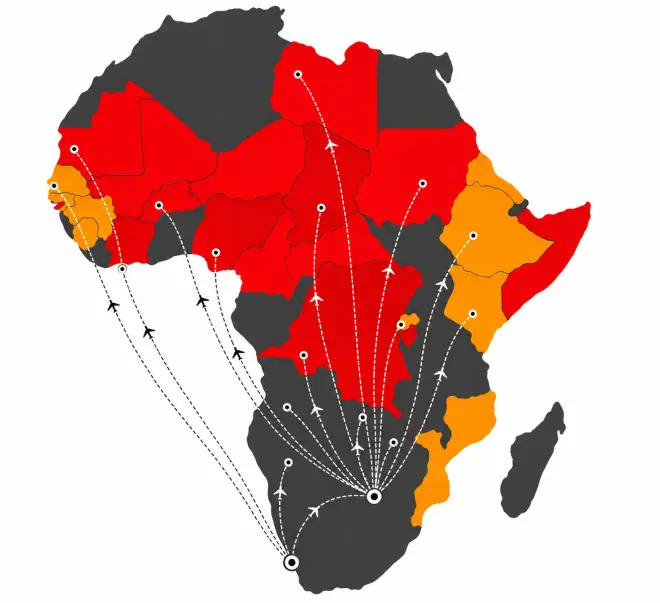
Africa presents significant opportunities for South African businesses. Industries such as mining, telecommunications, construction and engineering increasingly operate across borders, with employees regularly travelling to or being deployed in different African countries.
While many African countries have modernised and developed considerably, operating across the continent still presents a range of risks. One often-overlooked consideration is how insurers and their reinsurers perceive these risks – and whether employees are adequately insured when travelling or working in these countries.
Insurers’ risk perceptions, particularly those of international reinsurers (many based in Europe), do not necessarily align with our own. According to KPMG’s 2025 South African Insurance Industry Survey, Munich Re and Hannover Re together accounted for 79% of South Africa’s reinsurance market in 2024. Both are German-based groups.
While South African insurers retain their own underwriting expertise and risk appetite, their reinsurance arrangements can influence the risks they are willing or able to accept.
You may consider regular trips to certain African countries relatively routine and operationally safe. However, insurers may take a broader view, considering factors such as inadequate infrastructure, limited access to quality healthcare, political instability, civil unrest, terrorism and armed conflict. These perceptions can influence the availability of cover, its conditions and, in some cases, whether certain countries or activities are excluded altogether.
Here are a few important considerations when sending employees into Africa.
- Group Risk Benefits
Group life, disability and severe illness cover can be subject to territorial restrictions. Insurers adopt different approaches: some allow travel to most countries subject to annual or consecutive-day limits, while others restrict cover to particular regions, such as SADC, sometimes with additional exclusions. Certain insurers also require advance disclosure and underwriting approval for travel or deployments outside their standard parameters.
There may also be restrictions on the amount of cover available in certain countries, including limitations to free cover limits or specific maximum benefit amounts.
The distinction between temporary business travel and extended overseas deployment is particularly important. Cover applicable to a short business trip may not necessarily continue if an employee is seconded to another country or takes up residence there.
The DRC is an interesting example. The country has substantial mining operations, particularly in its southern provinces, some relatively close to established Zambian mining centres. Yet, because of conflict in parts of the country, insurers may apply restrictions at national level rather than distinguish between individual provinces or operating locations.
War, terrorism, riot and civil unrest exclusions are also important considerations. These are common in insurance contracts, although their wording and application differ. Some insurers may offer limited waivers or additional cover, subject to underwriting and an additional premium.
Australia’s Smart Traveller website is a useful starting point when assessing country risk. Its country-specific travel advisories illustrate how international organisations may assess security, political stability and healthcare infrastructure, and why insurers may take a more cautious approach.
My advice: Check the policy wording and speak to the insurer’s underwriters whenever employees travel outside standard territorial restrictions, or where the nature, frequency or duration of their travel could affect existing cover. Obtain written confirmation of any additional underwriting acceptance or conditions.
- Medical Schemes, International Travel and Evacuation Benefits
Understanding what medical cover applies while travelling abroad can be confusing. South African medical schemes are primarily structured around healthcare benefits in South Africa, while international emergency medical cover and medical evacuation, if applicable, are generally provided through separate arrangements or specific scheme benefits.
Members may be able to claim against their normal medical scheme benefits for certain treatment received abroad, subject to the scheme’s rules and reimbursement limits. Emergency treatment and medical evacuation are generally handled separately through international travel insurance or dedicated (Africa) evacuation benefits.
These arrangements have their own conditions, exclusions, geographical restrictions and time limits. Employees should obtain the relevant travel benefit confirmation or insurance certificate and keep it accessible, together with emergency assistance contact details. Some schemes also require advance travel notification or an application.
Pre-existing medical conditions are another important consideration. Travel insurance, whether associated with a medical scheme or arranged independently, may restrict or exclude claims relating to existing conditions. Some policies may exclude cover relating to recent medical consultations, treatment or investigations before departure. Where cover is excluded under the travel arrangement, members may still have access to their normal medical scheme benefits, subject to its rules and South African equivalent reimbursement limits.
Discovery Health Medical Scheme provides a particularly interesting example. Its Africa Evacuation Benefit, available on all plans except KeyCare, covers eligible members and dependants living or working in a defined list of African countries for emergency medical treatment and evacuation to South Africa or another authorised facility. Unlike the conventional International Travel Benefit, which covers members for 90 days, the Africa benefit can accommodate longer-term deployments in its specified countries, subject to the scheme rules and benefit limits.
Geographical coverage is not universal. Countries such as Mali, Mauritania, Niger, Burkina Faso and Sudan are not included in the defined Africa Evacuation Benefit country list, among others.
Interestingly, insurers commonly exclude the USA (and Canada) or treat them as special destinations requiring additional cover. This is largely due to the exceptionally high cost of medical treatment in the USA, as well as the complexities of differing healthcare regulations across jurisdictions.
The important point is that medical schemes differ considerably. Check the applicable rules and understand that international travel cover and dedicated evacuation benefits may have different conditions and restrictions from the scheme’s normal medical benefits.
- Personal Life and Disability Cover
Employees should also review their personal life and disability cover before undertaking regular occupational travel into higher-risk countries.
Some insurers accept an individual’s risk based on disclosures at inception, while others require ongoing disclosure of changes in occupation, travel patterns, residence or employment outside the country.
It is particularly important that employees disclose relevant travel and occupational risks when taking out new or additional cover. Where circumstances change, they should be proactive and check their policy requirements and obtain confirmation from the insurer where necessary.
- Specialised International Insurance
Where employees and their families are seconded to live elsewhere in Africa for extended periods, it may be more appropriate to arrange specialised international, US dollar-based insurance rather than rely solely on existing South African benefits.
South African medical schemes operate under specific legislation and are designed around the local medical scheme environment. International health insurance products operate differently and may provide a more suitable solution for employees permanently based elsewhere in Africa. The distinction between medical schemes and health insurance is important, as South African legislation and demarcation regulations govern which products may provide medical-scheme-type benefits.
The same consideration applies to life and disability cover. Where employees are remunerated in US dollars, it may be more appropriate to arrange benefits denominated in a similar currency, with underwriting and benefit structures designed for their international employment and risk exposure.
Fortunately, a number of quality international and US dollar-denominated insurance solutions are available in South Africa to address these needs. Some are specifically designed and underwritten locally, while others are offered by established international insurers with dedicated risk pools tailored to South African businesses operating across Africa.
Final Thoughts
Sending employees into Africa involves more than arranging flights, accommodation and security. Employers should also consider whether employees are adequately insured for the countries they visit, the work they undertake and the length of their deployment.
Territorial restrictions, exclusions and underwriting requirements can create unexpected gaps in cover. A little preparation before departure can make a significant difference when something goes wrong.
Don’t assume you’re covered. Check first.